
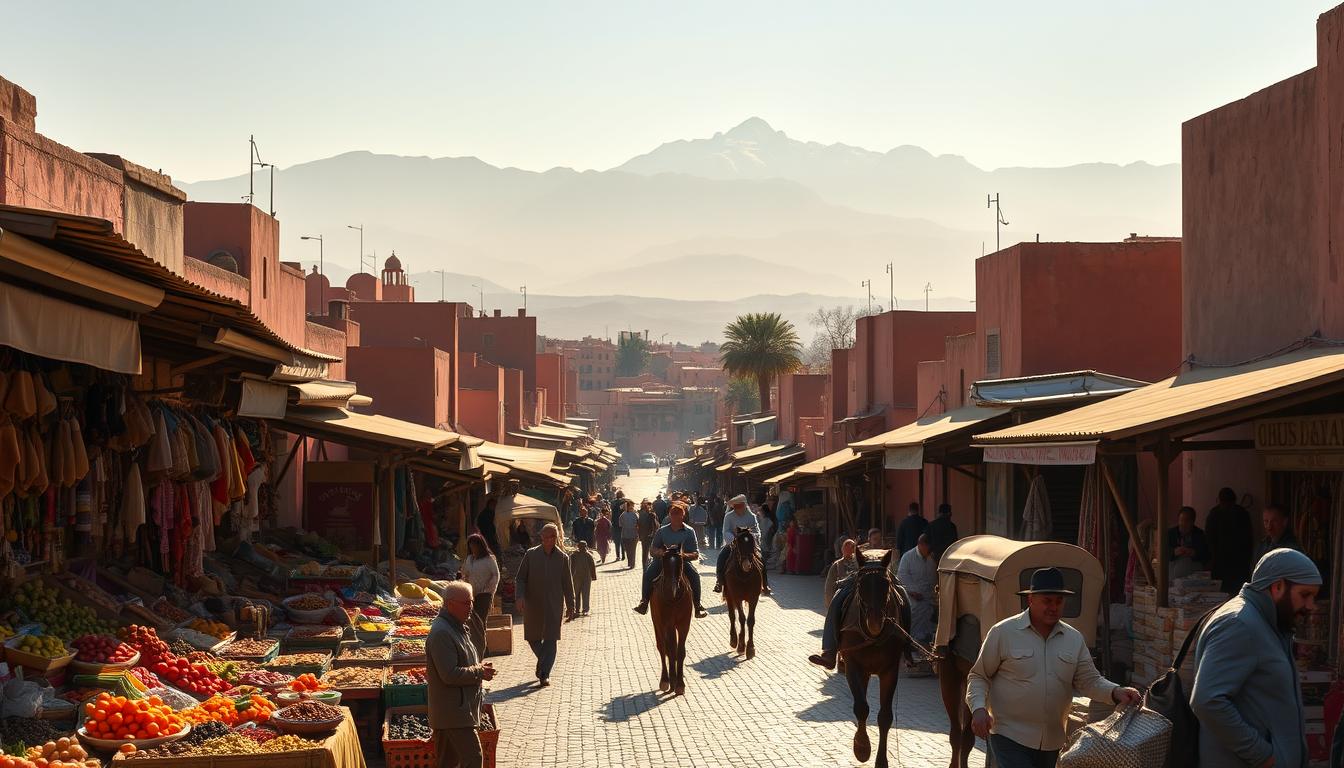
Marrakech Weather: What to Expect on Your Trip
Could Marrakech be both scorchingly hot and surprisingly chilly on the same day — and what does that mean for your plans?
The weather in Marrakech is shaped by a subtropical semi-desert climate. Expect long hours of sunshine, low rainfall and wide day–night swings because the city sits at about 460 metres above sea level.
For travellers planning Marrakech holidays, this means packing for extremes. Wear light, breathable clothing for the daytime heat. And don’t forget warmer layers for cool evenings. If you are booking travel to Marrakech, be ready for sudden temperature shifts. Also, watch out for occasional southerly winds that can lift dust from the Sahara.
weather in marrakech: an overview of the Marrakech climate
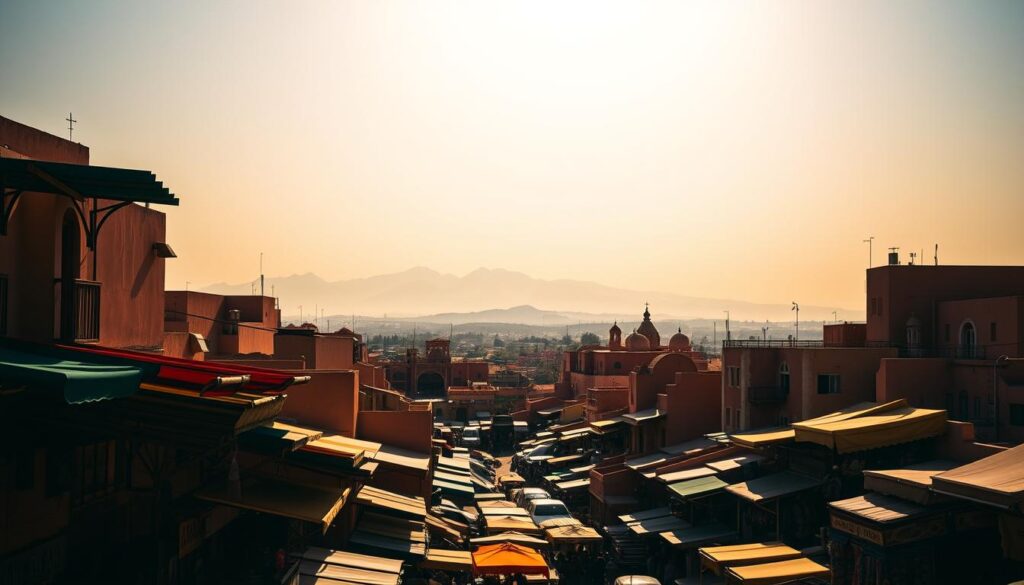
Marrakech’s weather is shaped by its location near the Sahara. It has a subtropical semi-desert climate. This means long, sunny days and very little rain. Visitors will find the air dry and the skies bright most of the year.
Subtropical semi-desert classification and what that means
The arid conditions and little rain are typical of Marrakech’s semi-desert climate. Summers are hot, while winters are mild. The landscape and farming have adjusted to the dry weather.
Annual sunshine, low rainfall and typical humidity levels
Marrakech enjoys plenty of sunshine all year. Rainfall is low, with most days being dry. The humidity is also low, making the heat feel less heavy but also drying.
Altitude effects: how 460m above sea level changes daytime and night-time temperatures
The city is 460 m above sea level. This makes nights cooler than days. It’s important to wear light layers, especially at night. Southerly winds can quickly change the weather, bringing dust and rising temperatures.
Seasonal snapshot: winter weather and what to pack
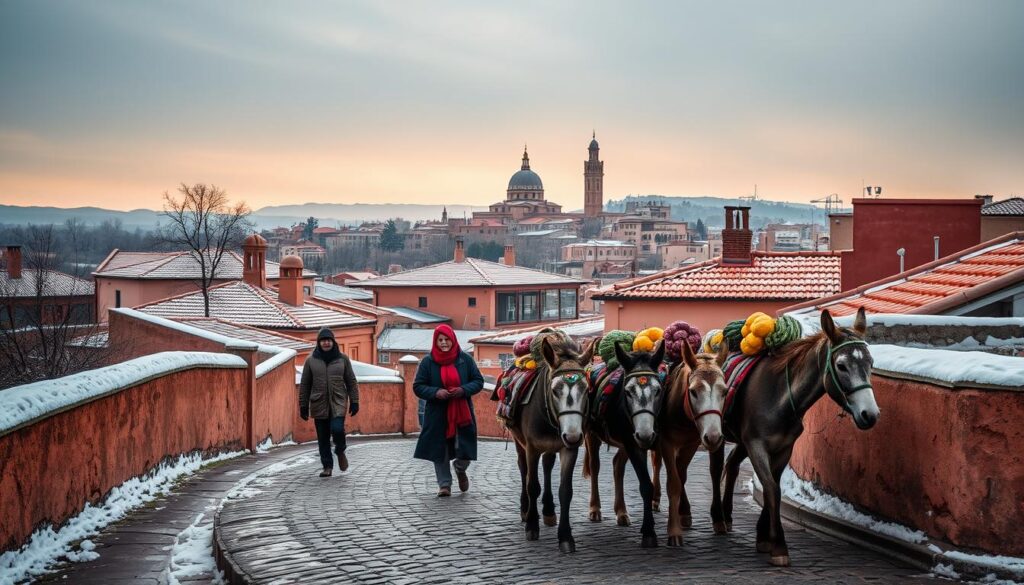
Marrakech’s winter months are from December to February. Days are often mild and pleasant, but evenings can get cold quickly. It’s wise to pack for sun, cloud, and the odd rainy day.
Typical daytime ranges
Daytime temperatures usually range from 15°C to 22°C. Southerly winds from the High Atlas can make it feel warmer, sometimes up to 30°C. So, don’t forget to pack a few light layers for changing weather.
Night-time lows and cold snaps
Nights can drop below 5°C, and cold snaps might bring temperatures near 0°C. A warm coat or insulated jacket is essential for evening walks and early mornings.
Rain and cloudiness
Rain is more common in winter, especially from November to February. Some winters are wetter and colder, while others are milder. A lightweight waterproof or compact umbrella is handy for unexpected rain.
Packing checklist for winter travel
- Warm coat or insulated jacket for evenings and cold snaps
- Thermal or fleece layers for layering
- Long trousers and closed shoes for night-time comfort
- Lightweight waterproof or umbrella for Marrakech rain
- A couple of lighter shirts for sunnier daytime periods
For winter holidays in Marrakech, mix warm and light clothes. Check forecasts but also listen to local advice. Marrakech’s weather can change quickly.
| Item | Why it helps | When to use |
|---|---|---|
| Insulated jacket | Keeps core warm during sub-5°C nights | Evenings, desert trips, cold snaps |
| Thermal/fleece layers | Easy to add or remove as temperatures change | Morning walks, layered indoors |
| Closed shoes | Comfort and warmth, protection from damp streets | Evening outings, walking in medina |
| Light shirts | Comfortable for sunny afternoons raised by southerly winds | Daytime sightseeing |
| Lightweight waterproof/umbrella | Shield against sudden showers and Marrakech rain | Uncertain-weather days, travel between sites |
Seasonal snapshot: spring weather and comfortable travel months
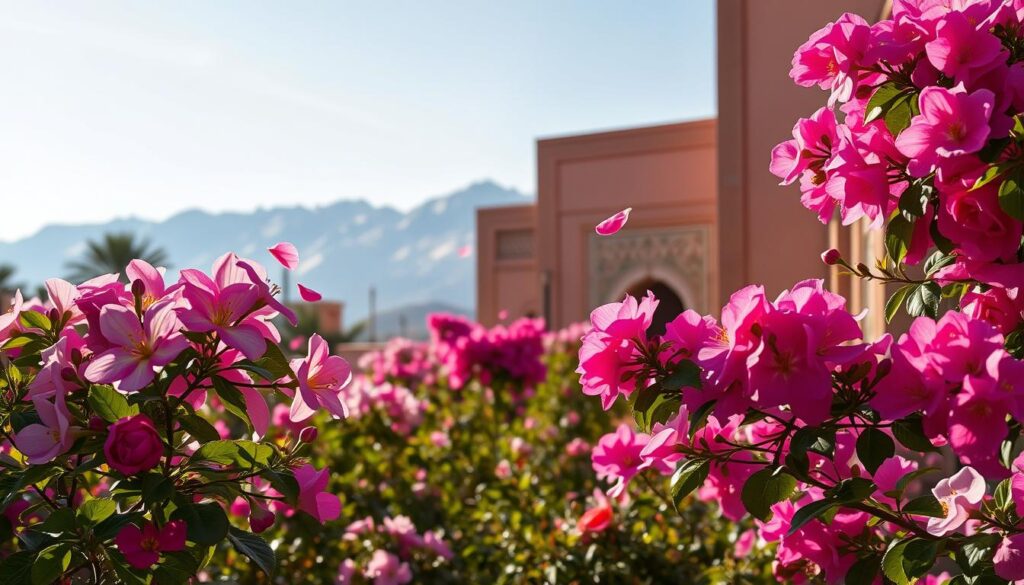
Spring in Marrakech is a lovely change from the cold winter. From March to mid-June, the weather is mostly dry with clear skies. This makes spring a great time for exploring and outdoor activities.
Temperatures and variability from March to mid-June
In March, days start to warm up to the mid-20s°C, but nights can still be cool. By mid-June, days can reach the mid-30s°C. Sometimes, southerly winds in April can make temperatures briefly rise to the high 30s or low 40s°C.
Warm days, cool nights and the best months for sightseeing
Walking around the medina and Jardin Majorelle is perfect in the daytime warmth. Nights are cool, so a light jacket is a good idea after dark. April and May are the best times to visit Marrakech for pleasant weather and fewer extreme temperatures.
Events and festivals that coincide with spring weather
Spring is full of cultural events. Marrakech festivals happen in April and May, filling the city with music, art, and food. Booking activities like hot-air balloon rides and guided tours early is wise. The best times for busy places are early mornings and late afternoons.
Plan for flexible days. This way, you can enjoy markets, museums, and desert trips when the weather is perfect.
Seasonal snapshot: summer weather and coping with heat
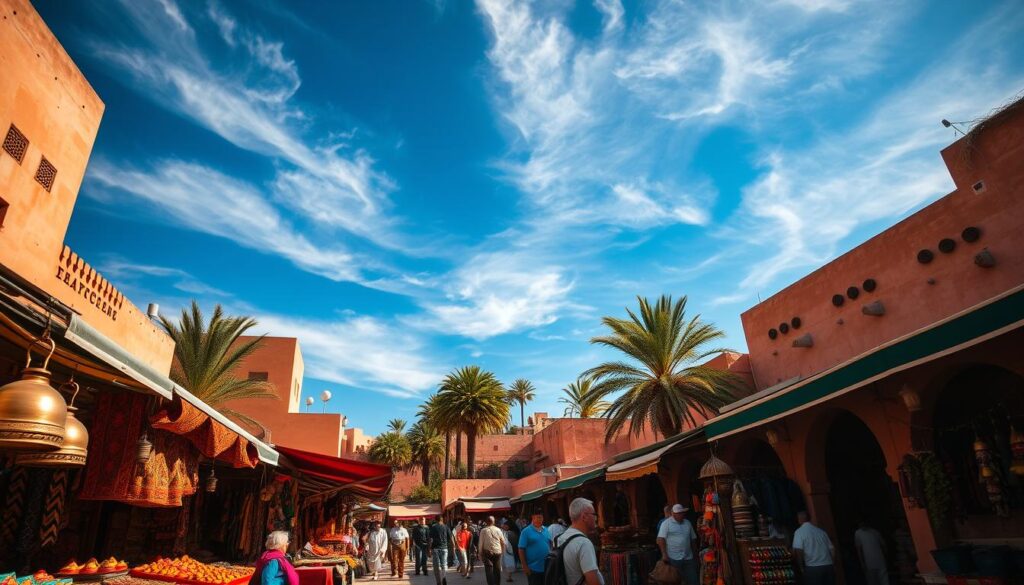
Summer in Marrakech starts in mid-June and ends in September. It’s the hottest, driest, and sunniest time of the year. Daytime temperatures often reach the 30s°C, sometimes going up to the mid-to-high 40s°C in July and August.
Peak temperatures and heat risk
July and August are the hottest months. Temperatures can hit the mid-40s°C in the afternoons. This intense heat can make outdoor activities challenging.
Desert camps in the south might close during this time for safety. So, it’s wise to check availability before booking.
Daytime heat versus cooler nights
Marrakech is about 460m above sea level. This helps the nights cool down more than coastal areas. Even after hot afternoons, evenings can be quite pleasant.
Many people take a siesta-style schedule. They save their sightseeing for the morning and late afternoon.
Practical tips for staying well
Stay hydrated and protect your skin from the sun with high-SPF products. Wear light, breathable clothes and a wide-brim hat. Booking transfers and indoor activities ahead of time can help avoid long waits in the sun.
Choose riads, museums, and hammams for shelter during the hottest part of the day. Plan desert and mountain trips for cooler months or early starts. These tips make summer holidays in Marrakech more enjoyable and help you cope with the heat.
Seasonal snapshot: autumn weather and transition months
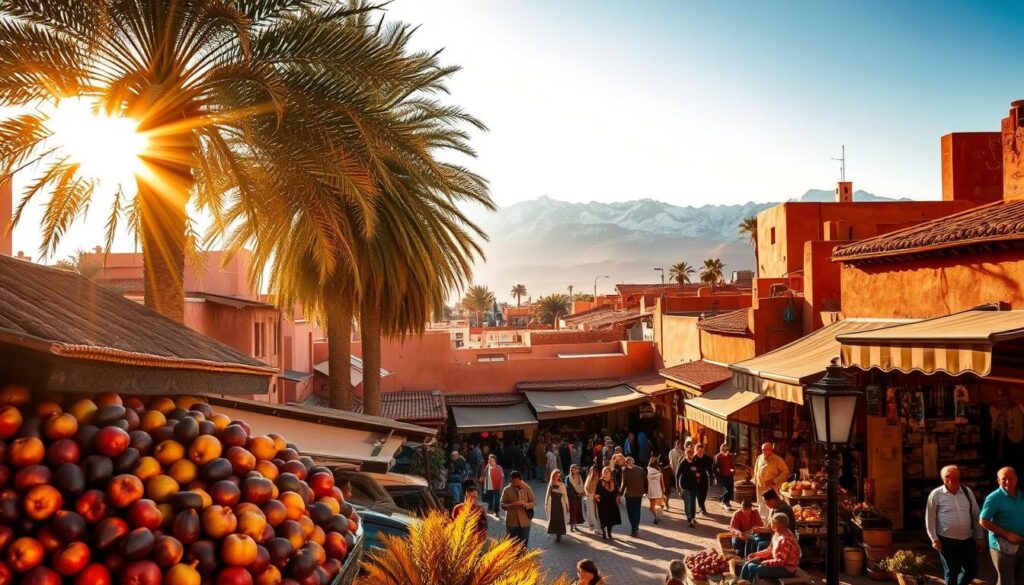
The weather starts to cool down in mid-September. Evenings and mornings get cooler, while afternoons can still be warm. This makes it easier for those who prefer milder weather.
Cooling trends from mid-September to November
Temperatures drop from late September to October. Days are still warm, but nights need a light jacket. This makes Marrakech perfect for exploring the medina and gardens.
Increased rainfall towards November and what to expect
November brings more rain. Expect short, heavy showers and more clouds. Marrakech’s rain is less than northern Europe’s, but it can still impact plans.
Good months for travel and outdoor excursions
October and early November are great for visiting Marrakech. The weather is comfortable, and it’s less crowded. These months are perfect for trips to the Atlas Mountains and desert.
Consider what you want: cooler nights, fewer tourists, or a refreshing rain shower. Marrakech’s autumn weather is ideal for a variety of activities and relaxed sightseeing.
Daily extremes: temperature swings and wind effects
Marrakech is famous for its sudden changes in weather. The temperature can drop a lot at night after being very hot during the day. This is because the city is about 460 m above sea level.
Large diurnal temperature ranges and how to layer clothing
Days in Marrakech can be very hot, but nights can get quite cool. To stay comfortable, wear layers. Start with something light, add a shirt, and have a jacket ready for the evening.
Southerly winds from the High Atlas and rapid temperature spikes
Southerly winds can bring warm air from the High Atlas to Marrakech. These winds can make the temperature rise quickly. It’s best to plan your day to avoid the hottest times when these winds hit.
Sand and dust events: minor sandstorms and visibility considerations
Strong winds can pick up desert sand and dust, causing short sandstorms. These storms can make it hard to see and irritate your eyes and airways. Wear sunglasses, a scarf, or a mask to protect yourself from dust.
Weather forecasts might not always be right. Be prepared for changes and ask locals about any unexpected weather before you go out.
Rainfall patterns and the best months for avoiding wet weather
Marrakech gets less rain overall, with most falling in the cooler months. This info helps plan outdoor adventures and desert trips. Knowing when it rains helps avoid wet days and choose the best times to visit.
Average annual rainfall sits at about 240 mm. Rain falls in short, heavy bursts, not long steady. This can make streets and rural paths muddy after a shower. It might also mess up trips to the High Atlas or desert camps.
Rain chances go up from October, peaking in November to February. These months have the most wet days. So, if you’re planning a trip to Marrakech, expect more changeable weather. Autumn and spring are drier and better for outdoor activities.
For desert trips, skip the wettest months to avoid muddy tracks. Many prefer spring and autumn for their mild weather and lower rain risk. Always check the weather forecast before heading out and have indoor plans ready for rainy days.
To avoid rain in Marrakech, pick the right months, watch the forecast, and choose flexible travel. Also, add extra time for rural routes. This way, your plans stay flexible and you’re more likely to enjoy sunny days.
Comparing Marrakech climate with coastal Agadir weather
When planning a trip to Morocco, you might think about the heat of inland areas versus the coolness of the coast. Looking at the weather in Marrakech and Agadir shows big differences. These differences affect what you do, what you wear, and what you pack.
Coastal moderation in Agadir versus inland heat in Marrakech
Agadir is by the Atlantic and gets cool sea breezes all year. This keeps summers cooler than inland cities. Marrakech, on the other hand, gets very hot during the day but cools down quickly at night. This is because it’s inland and has less humidity.
When to choose Agadir holidays for cooler sea breezes
Choose Agadir for swimming, beach days, and cooler summers. It’s perfect for those who don’t like the heat. The town’s weather is often nice for walking and eating out in the mornings and evenings.
Combining Marrakech and Agadir on the same trip: weather considerations
Visiting both places offers variety but requires planning. Marrakech is hot and dry, while Agadir is cooler and windier. Pack light clothes for Marrakech and a windproof jacket for Agadir evenings.
| Feature | Marrakech | Agadir |
|---|---|---|
| Typical summer daytime | Highs often above 35°C with low humidity | Highs around 25–30°C thanks to sea breezes |
| Night-time temperatures | Can fall rapidly; cooler nights around 20°C | Milder nights, usually 18–22°C with coastal humidity |
| Best for beach activities | Limited; pools and nearby lakes | Excellent; long sandy bays and water sports |
| Wind and sand risk | Occasional southerly winds and dust | Persistent coastal winds; calmer on sheltered days |
| Ideal traveller | Cultural explorers who can handle heat | Families and sunseekers wanting milder weather |
When deciding between Marrakech and Agadir, think about the time of year and what you want to do. The coastal versus inland difference affects what you wear, how you travel, and your daily plans. Traveling between the two means adjusting to different weather and activities. Pack for both hot, dry days and cooler, breezy evenings by the sea.
What the weather means for desert trips and Atlas Mountain excursions
When planning desert trips from Marrakech or High Atlas treks, knowing the weather is key. The time of year, temperature changes, and local forecasts affect what you need to pack and the best routes. Here’s a quick guide on seasons, desert and mountain weather, and the best times to visit.
Desert camp seasonality and closures
Many desert camps close in the hottest summer months. This is because the daytime temperatures can be too high. Places like Zagora and Merzouga are best visited in spring and autumn for comfort and safety.
Book your stay for the shoulder seasons to avoid crowds. Camps offer more services then and staff are better prepared for the cooler nights. Always ask about generator hours, shaded areas for dining, and water availability when booking.
Temperature differences between Marrakech, Zagora and Merzouga
The desert interior can get much hotter during the day and colder at night than Marrakech. Marrakech’s weather is generally milder.
Zagora and Merzouga experience extreme heat in summer and cold nights in spring and autumn. Wear layers and plan your activities for early morning or late afternoon to stay comfortable.
Altitude, timing and layering for High Atlas hikes
Weather in the High Atlas changes quickly with altitude. Higher trails are cooler and can have sudden storms or strong winds.
Start your treks early to avoid the afternoon winds. Choose routes with clear paths down. Pack insulated mid-layers, a windproof jacket, and sun protection for changing weather conditions.
| Location | Best seasons | Daytime range (typical) | Night-time notes | Practical tip |
|---|---|---|---|---|
| Marrakech | Spring, autumn | 15–35°C | Mild to cool; light jacket | Plan city sightseeing midday; mornings for souks |
| Zagora | Spring, autumn | 20–40°C | Can drop sharply; blankets needed | Confirm camp availability for desert trips from Marrakech |
| Merzouga | Spring, autumn | 25–44°C | Very cold nights in shoulder seasons | Check merzouga weather before booking multi-day treks |
| High Atlas (1,000–4,167 m) | Late spring to early autumn | 5–25°C depending on elevation | Sub-zero possible at higher altitudes | Layer for altitude; avoid afternoon storms |
Packing guide for Marrakech holidays: clothing and essentials
Plan your suitcase for changing days and cool nights. Marrakech’s weather is hot and dry in the afternoons. But, it gets cooler at night, especially at 460m altitude. A good packing list includes breathable clothes and a few warm layers for the evenings.
Choose lightweight, breathable fabrics like cotton and linen. Loose shirts and long-sleeve tops keep you cool. They also protect your skin from the sun. Opt for neutral colours that reflect the sun and hide dust.
Evening layers
Don’t forget a warm jumper or light coat. Nights can be chilly, even when the day is mild. A fleece or thin insulated jacket is a good idea.
Sun and hydration essentials
Sun protection is key in Marrakech. Pack high-SPF sunscreen, a wide-brim hat, and good sunglasses. Also, bring refillable water bottles or a small hydration pack to stay hydrated.
Dust and sand precautions
Bring a scarf or lightweight dust mask and snug eyewear for sand events. These items are useful on desert trips and windy days near the Atlas foothills.
Respectful dress and cultural notes
Wear modest, smart casual clothing to respect local culture. Western styles are common in Marrakech. But, covering your shoulders and wearing longer skirts or shorts is respectful at religious sites and in rural areas.
Footwear and extras
Comfortable walking shoes are a must. Also, pack a small first-aid kit, copies of your travel documents, and a compact umbrella or lightweight waterproof for winter visits.
| Item | Why pack it | Best options |
|---|---|---|
| Breathable tops and trousers | Keep cool in hot afternoons; protect from sun and dust | Cotton shirts, linen trousers, loose dresses |
| Warm layer | Evening chill at altitude; useful unexpected cold snaps | Fleece, lightweight insulated jacket, thin coat |
| Sun protection Marrakech | Prevent sunburn and heat discomfort during sightseeing | SPF50+ sunscreen, wide-brim hat, UV sunglasses |
| Hydration gear | Maintain fluid levels in dry climate and during walks | Refillable water bottle, hydration bladder, electrolyte sachets |
| Dust and sand protection | Protect lungs and eyes during sand events or desert trips | Light scarf, dust mask, wraparound sunglasses |
| Respectful dress Morocco | Show cultural respect; avoid drawing undue attention | Knee-length skirts, long shorts, tops that cover shoulders |
| Footwear and practical items | Comfort for long days on uneven streets; cover rainy spells | Walking trainers, sandals, small umbrella, first-aid kit |
| Travel documents and copies | Fast replacement if lost; helpful for organisers | Printed copies, digital photos in secure cloud storage |
Practical travel tips: planning activities around the weather
Match your day plans with the weather for the best Marrakech experience. Early morning and late afternoon are cooler and have softer light. Use the hottest part of the day for indoor activities like museums and hammams.
Best times of day
Explore souks and the main square at dawn for a quieter experience. For the best Jemaa el-Fna time, go around sunset when it’s lively. Try to visit monuments before 11:00 or after 16:00 to avoid the heat.
Booking weather-sensitive outings
Book activities like hot-air balloon flights and desert treks for clear skies. Choose tours with flexible cancellation policies. Balloon rides start early, so be ready for an early wake-up call.
Desert and Atlas pointers
Check the weather before heading to the Sahara. Make sure camps are open and guides are aware of the temperature. For Atlas treks, check the weather and hire experienced guides from trusted companies.
Transport planning
Save time and money with Marrakech transport tips. Book airport transfers to avoid high taxi costs. Use official taxis or services like Welcome Pickups. Agree on the fare before you start.
Daily schedule example
- 06:30–09:30: Souks and hot-air balloon Marrakech pick-up
- 10:00–15:30: Indoor visits, lunch and rest during the hottest period
- 16:00–19:30: Gardens, monuments and Jemaa el-Fna best time at sunset
- 20:00 onwards: Evening dining and cultural shows
Watch short-term weather forecasts. Carry water and sun protection. Be flexible with your plans to adapt to changing weather.
How unpredictable weather can affect your trip and how to prepare
Marrakech’s weather can change quickly. You might start the day with clear skies and warm air. But then, strong winds from the High Atlas can bring sudden heat or sand.
This makes it hard to rely on short-term weather forecasts. Travelers often find big differences between what apps predict and what they actually experience.
Why forecasts fail
Local wind patterns and quick temperature changes make Marrakech’s weather hard to predict. An app might say it’s 20°C, but the city feels like 7°C when the wind drops at night. Expect big changes in temperature, especially from October to February.
Flexible planning
Make your Marrakech itinerary flexible. Add extra days for desert trips, Atlas hikes, and hot-air balloon rides. Try to do outdoor activities in the early morning or late afternoon when the weather is usually better.
Insurance and backup options
Get travel insurance Morocco that covers cancellations and weather issues. Choose from well-known providers like AXA or Allianz for clear terms. Keep a list of indoor places like the Yves Saint Laurent Museum, traditional hammams, and cosy riads for when the weather ruins your outdoor plans.
Listen to local guidance
Riad advice in Marrakech is invaluable. Staff at riads and local tour operators know the latest conditions. They can warn you about sandstorms or sudden wind changes. Always ask for advice before heading out to the Atlas or the dunes; local knowledge is often better than general forecasts.
Practical checklist
- Pack layers and a lightweight windproof for quick temperature changes.
- Schedule important excursions with flexibility and plan extra days for weather delays.
- Get travel insurance Morocco that includes weather-related cancellation cover.
- Check riad advice Marrakech every morning for the latest local weather updates.
Conclusion
Marrakech’s weather is a mix of sunny days and low rainfall. It has big temperature changes from day to night. This affects how you pack and plan your trips.
The best months to visit are April, May, October, and early November. These times offer mild weather for outdoor adventures. Summer can be very hot, so plan your days wisely.
Always be ready for changes in the weather. Bring layers, sun protection, and a waterproof. Book important activities early and ask locals for the latest tips. With the right preparation, you’ll have a great time in Marrakech, whether you’re exploring the medina or going on a desert trip.